
Blog
Do Chefs Need a Food Safety Supervisor Certificate?
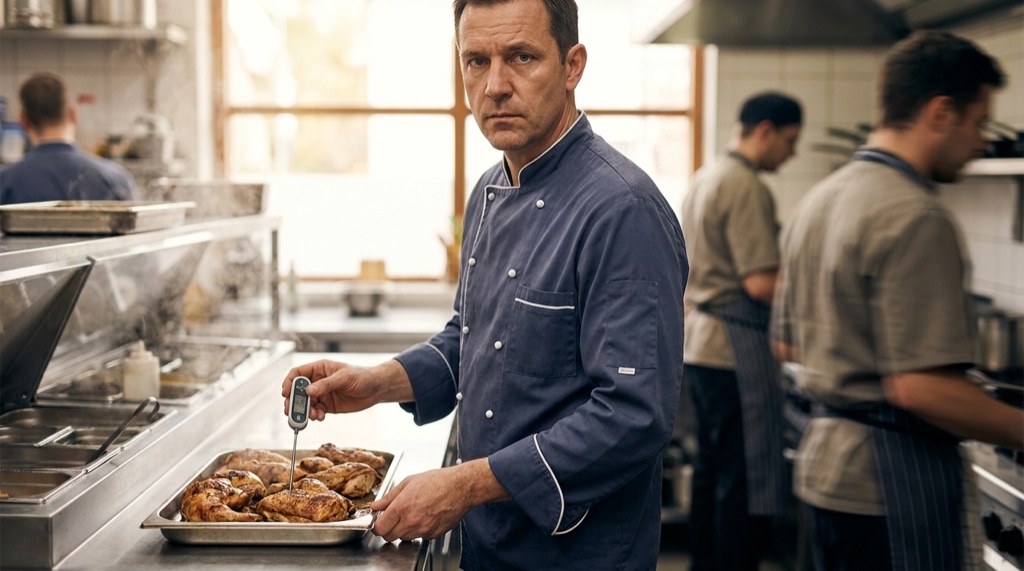
"I'm the chef, so I need the certificate" is one of the most common and most wrong assumptions in a commercial kitchen. No Australian state or territory writes the word "chef" into law as the person who must hold a Food Safety Supervisor certificate. What the law actually requires is that a food business appoints a Food Safety Supervisor — a specific person, named and recorded, not a job title. The chef is very often that person, but being the chef doesn't put the obligation on you automatically, and treating it as if it does causes two real problems we see constantly: a casual chef buying a certificate they didn't need, and a business with nobody appointed at all because everyone assumed the chef already "had it covered". This goes deeper than the basics — for the full picture of which Food Safety Supervisor course and pathway fits your role, start there first.
Does being the chef automatically make you the Food Safety Supervisor?
No. The appointment is made by the business, not inherited from a job title. Food Standard 3.2.2A — in force nationally since 8 December 2023 — puts the duty on the food business to appoint at least one trained Food Safety Supervisor who is reasonably available to direct staff on safe food handling. Food Standards Australia New Zealand's own guidance is explicit that this is a business obligation, not a role description: a food business must appoint someone, and that someone needs the authority to give direction, not a particular title on their payslip.
In a single-venue restaurant with one full-time head chef on site every service, the distinction barely matters in practice — the chef is on the floor, handles the highest-risk food, and has the standing to bin a dodgy delivery, so they're almost always the obvious appointment. The distinction starts to matter the moment your situation isn't that simple: multiple venues, casual shifts, a chef who's about to go on leave, or a chef who owns the business rather than works for one. Those are the situations this article is actually about.
What if you work casual or agency shifts across several venues?
Check whether the venue already has an appointed supervisor before assuming you need your own certificate. The appointment is made per food business, not per person who happens to cook there, and in New South Wales the rule is explicit about this: the NSW Food Authority's own guidance states that a nominated Food Safety Supervisor must "not be an FSS for any other food premises or mobile catering business" — meaning the same person cannot simultaneously be the registered, appointed supervisor at two different venues under the NSW scheme. The practical read-through for a casual or agency chef is straightforward: holding a certificate doesn't make you "the" Food Safety Supervisor anywhere until a specific business names you as its appointed person, and most venues that already run with a certified head chef, manager or owner on site don't need you to be a second one for a one-off shift.
That said, a certificate is genuinely useful for anyone picking up shifts across multiple kitchens — it's nationally recognised, it's yours to keep, and plenty of venues are glad to appoint a reliable regular as a backup supervisor rather than train someone from scratch. The point isn't that casual chefs should avoid getting certified; it's that nobody should assume they personally are on the hook for a given venue's compliance just because they're standing at the pass. If you're unsure whether a venue you work at needs a supervisor at all, our free do I need a Food Safety Supervisor check settles that for any specific business in about a minute.
| Chef's situation | Does the chef need to be the appointed FSS? | What actually matters |
|---|---|---|
| Full-time head chef, one venue, on site every service | Usually, but not automatically — only once the business names them | They're on site daily and can direct staff, so they're the natural appointment |
| Casual chef covering one shift at a venue with an existing certified supervisor | No | The venue's existing appointment already covers the business; one shift doesn't require a second supervisor |
| Agency or casual chef working several different venues regularly | Only at a venue that specifically appoints them | Check with each business first — don't assume you personally are responsible everywhere you cook |
| Second chef or sous chef trained as backup cover | Can be, by choice | Businesses that run long hours or multiple shifts often certify a second person for exactly this reason |
| Head chef going on leave or resigning | The business must have — or quickly arrange — another appointed person | A gap in appointment is a compliance gap, even temporarily |
| Self-employed private or mobile chef running their own catering business | Yes — or they must appoint someone else | As the business owner, the obligation falls on them directly; there's no separate employer to assume it |
What happens when the certified head chef leaves or goes on leave?
The business is left without an appointed supervisor, and that's a compliance gap from day one of the gap — not something that only becomes a problem if an inspector happens to ask. A Food Safety Supervisor certificate belongs to the person who earned it, not the venue, so when that chef resigns, moves on, or takes extended leave, their certificate goes with them. Nothing automatically appoints a replacement.
The fix is to train a backup before you need one, not after. The NSW Food Authority's own guidance makes this exact point: larger businesses that operate longer hours "may choose to nominate several people to be trained and appointed as an FSS to help cover shift work and annual leave" — there's no rule capping a business to a single certified person, and most venues that trade more than a handful of hours a day are better off with two. A sous chef, assistant manager or senior kitchen hand is often the obvious second certificate: they're already on site, already handling food, and training them costs a few hours online rather than leaving the business exposed the week the head chef hands in their notice.
If you're a café or restaurant owner reading this because your head chef just gave notice, don't wait for the handover date to sort it out — enrol their replacement, or a second staff member, now, so there's no day where nobody on site is the appointed supervisor.
Self-employed and private chefs: you are the business
If you run your own catering business, work as a private chef, or operate a mobile food business, the obligation lands on you directly — there's no employer to assume it instead. Food Standard 3.2.2A attaches the duty to the food business, and when you're a sole trader or the owner-operator of your own kitchen, the business is you. That means you either need to be your own appointed Food Safety Supervisor, or formally appoint someone else in your operation who is — there's no third option where nobody is responsible because you're small or you're not based in a fixed premises.
This catches people out more than almost any other scenario, because the instinct for a solo private chef or a one-person catering outfit is to think of certification as something bigger businesses deal with. A food truck, a wedding caterer transporting trays of hot food for hours, or a private chef cooking in someone else's kitchen are all handling exactly the unpackaged, potentially hazardous, ready-to-eat food that Standard 3.2.2A is built around — arguably with more risk than a fixed restaurant, given the time food spends in transport and holding before it's served. Our catering and events course page covers what this looks like in practice for mobile and event caterers specifically.
What it actually costs to get sorted
Whoever ends up as the appointed supervisor — the head chef, a backup you're training, or yourself as a sole trader — the course and the price are the same: $129 for the nationally recognised SITXFSA005 and SITXFSA006 units, delivered 100% online, with no scheduled start date. Most students don't wait long for their certificate either: in September 2026, 82.9% of marking decisions came back within 24 hours, with a median turnaround of just 2.8 hours, and every enrolment is backed by a money-back guarantee.
Working in New South Wales? The national units aren't the whole story there — NSW requires its own additional certificate from an approved provider on top, which adds $35 (the state's $30 NSW FSS Certificate issue fee plus $5 postage) for a $164 all-in price. See our NSW Food Safety Supervisor page for exactly how that works, including what changes if the appointed person is a casual or agency chef rather than a permanent employee.
Get the right person covered, not just a person
The actual compliance question was never "does the chef need a certificate" — it's "has this specific business named a specific, currently certified person who's reasonably available when high-risk food is being handled." Sometimes that's the head chef. Sometimes it's a backup you train before you need one. Sometimes, if you're the one running the business, it's you. Work out which situation you're actually in, then enrol online — it takes a few hours and your certificate is usually back the same day.
Is "chef" a legally recognised Food Safety Supervisor role in any Australian state?
No. Every state and territory attaches the Food Safety Supervisor requirement to an appointment the business makes, not to a job title. A chef is very often the person appointed, because they're on site daily and have the authority to direct food handling, but no law names the chef role specifically as the one that must hold the certificate.
I'm a casual chef working at three different venues — do I need three certificates?
Almost certainly not. The appointment is made per food business, so if each venue already has its own appointed Food Safety Supervisor — a manager, owner or permanent chef — your one-off or casual shifts there don't require you to hold a separate certificate for each one. Check with each venue rather than assuming. If you want your own certificate anyway, one nationally recognised qualification covers you no matter which kitchen you're in.
Can two people at the same business both be certified Food Safety Supervisors?
Yes, and for a venue trading long hours or multiple shifts, it's standard practice. The NSW Food Authority's own guidance specifically encourages larger or longer-trading businesses to train and appoint several people to cover shift work and annual leave. There's no rule limiting a business to one certified person.
Our head chef just resigned — are we non-compliant until we hire a replacement?
You're at risk of it. The certificate belongs to the person, not the venue, so once they leave, your business may have no appointed Food Safety Supervisor at all. The fix is to have already trained a second person as backup, or to urgently enrol someone — a sous chef, manager or incoming hire — rather than wait for a new chef to start.
I'm a mobile caterer with my own ABN — do I need to be the Food Safety Supervisor myself?
In most cases, yes, unless you formally appoint someone else in your operation to hold the role. As a sole trader or owner-operator, you are the food business, so the obligation that would normally sit with "the business" sits directly with you. There's no employer in the picture to assume it instead.
How much does the certificate cost and how long does it take?
$129 for the nationally recognised SITXFSA005 and SITXFSA006 units, studied online at your own pace. In September 2026, 82.9% of students had their marking decision back within 24 hours, with a median of 2.8 hours, and every enrolment carries a money-back guarantee. Working in NSW adds $35 for the state's own certificate, for $164 all-in.
Related guides
Get your Food Safety Supervisor certificate
Nationally recognised · 100% online · certificate within one business day.
View the course — $129 →